
A lot of people don’t realise how easy it is to damage dentures. They can crack, loosen, or wear down much sooner than you expect if you don’t take proper care of them. It’s a frustrating problem because dentures aren’t cheap. And when they break, it usually means more than just extra cost. You may also experience sore gums and trouble eating the foods you enjoy.
At The Village Dentist in Castle Hill, we fit patients with new dentures and show them how to look after them. Over the years, we’ve seen the slip-ups that shorten a denture’s life and the simple habits that can keep them in great shape.
Here are six expert tips from our dentists to help you look after your dentures so they stay comfortable, strong, and reliable for years to come.
1. Understand the basics of denture materials and wear
Knowing the different types of dentures and what they’re made of can help you understand the care they need.
- Different types: Full dentures replace an entire arch of teeth. Partial dentures fill just the gaps. And implant-supported dentures clip into place for extra stability. These are all classed as removable dentures. So, they all come out of your mouth for cleaning and rest.
- Common materials: Most dentures are made from acrylic resin. It’s strong, lightweight, and easy to adjust if need be. Some dentures also use a metal base for extra strength. This is especially common with partial dentures. Then there’s flexible nylon, which is sometimes used to make the fit more comfortable. Each material wears differently.
2. Follow a daily denture care routine
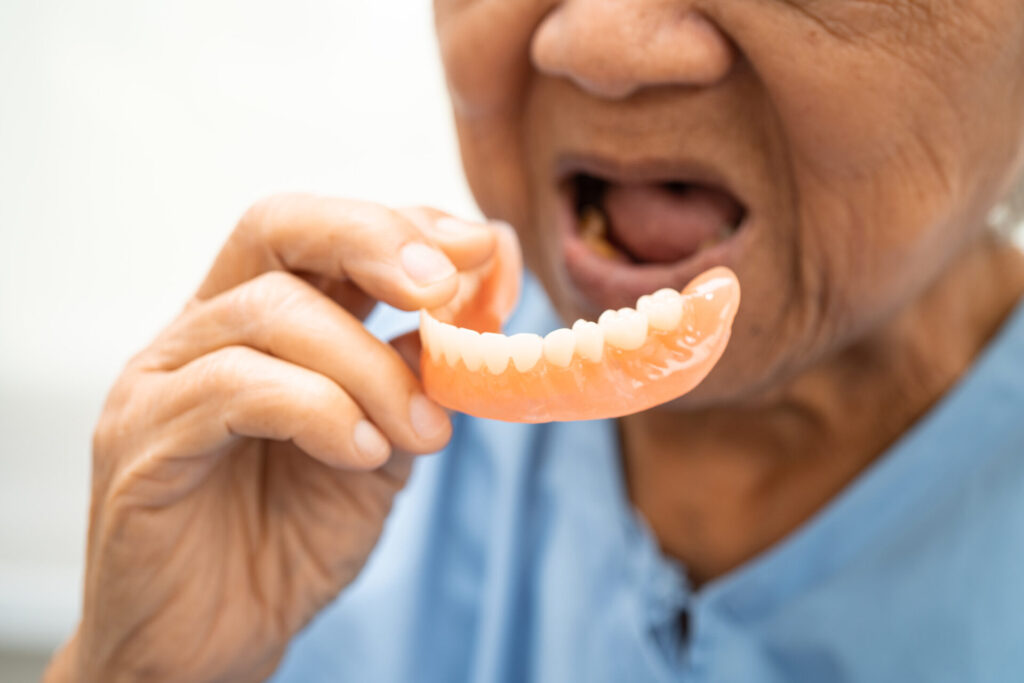
Just like natural teeth, dentures need daily attention. A few small habits can be the difference between clean dentures that last and unhygienic ones that wear out before you know it.
- Rinse after every meal: Take your dentures out and give them a quick rinse under running water. This helps remove food particles and prevents bacteria from building up.
- Brush gently: Use a soft toothbrush or a special denture brush. And always be super gentle when cleaning the surfaces.
- Skip abrasive toothpaste: Regular toothpaste or gritty cleaners can damage dentures. Stick with products made for them instead, like a non-abrasive denture paste or denture cleansing tablets.
- Soak overnight: Dentures accumulate bacterial and fungal elements that can’t be cleaned off by normal brushing with soap and water. Soaking them overnight in a denture disinfectant will clean these microscopic elements away. This can keep them fresh and ready for the next day.
3. Handle and store safely
Dentures are tougher than they look, but they’re not indestructible. Proper care when handling and storing them goes a long way in keeping them intact and hygienic.
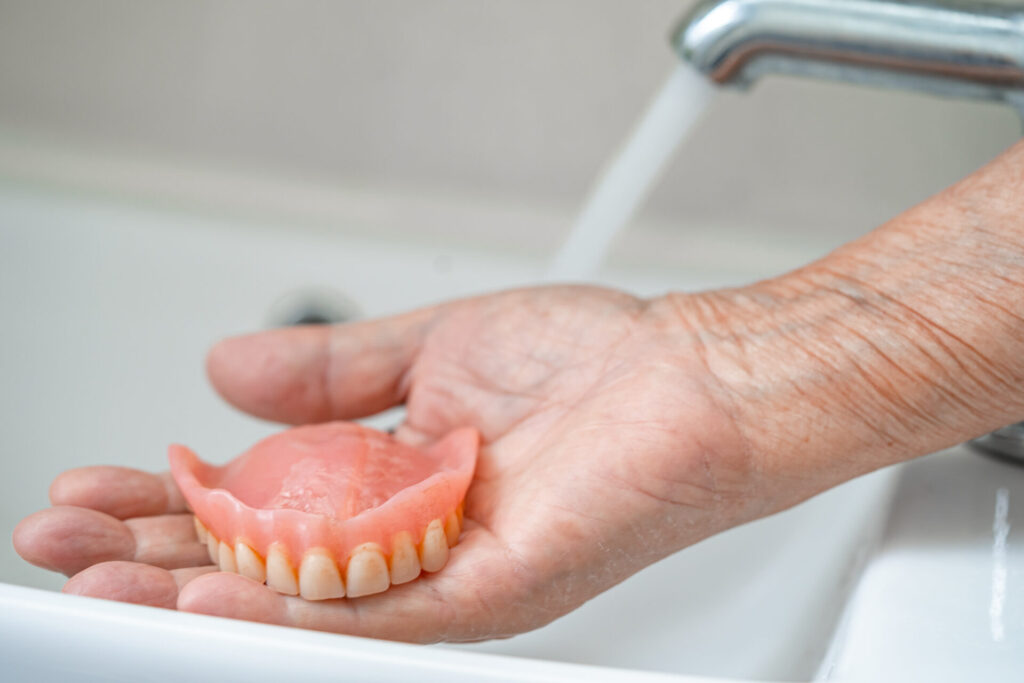
- Pick them up carefully: Always handle dentures over a folded towel or a sink filled with water. That way, if you drop them, they’re less likely to crack.
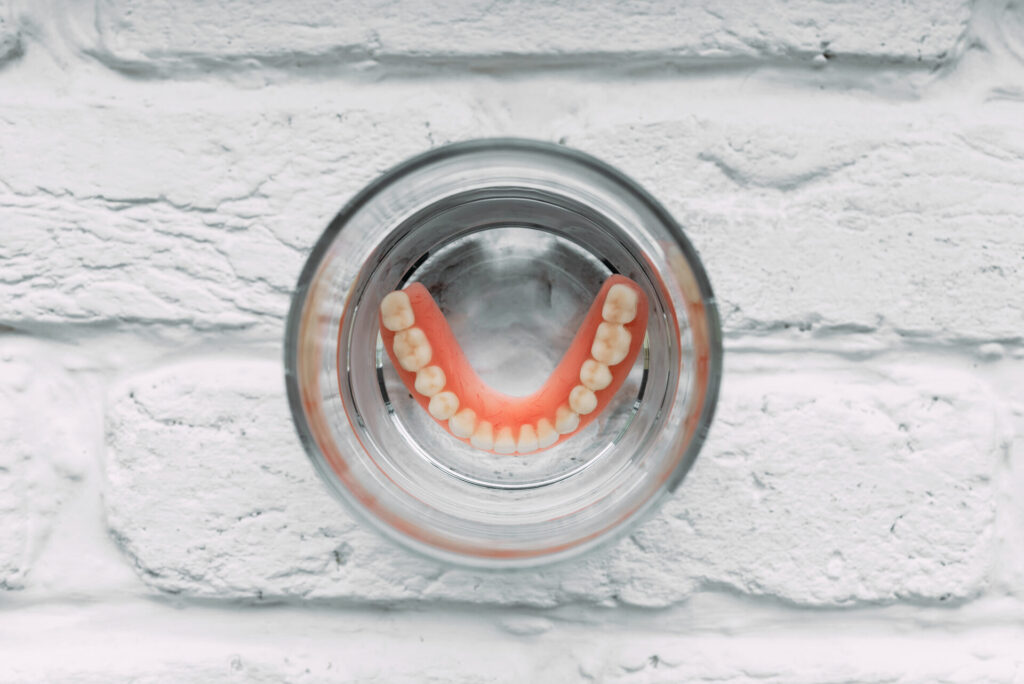
- Store in a safe container: As mentioned, when you’re not wearing them, place your dentures in a clean container after brushing. This can be without any liquid. Alternatively, you can use a denture cleaning solution to help prevent fungus living on the denture from causing fungal infections in the mouth.
- Avoid heat and dryness: Never leave dentures sitting in the sun, near a heater, or in hot water. Extreme heat can warp their shape and make them uncomfortable to wear.
4. Avoid harmful habits and substances
Some cleaning shortcuts or everyday bad habits (as small as they may seem) can do more harm than good. Steering clear of the prime culprits below can help you get more life out of your dentures.
- Don’t use bleach or harsh chemicals: These can weaken the material and also change the colour of your dentures. It can cause them to become brittle and unsafe to wear.
- Don’t bend clasps or make your own adjustments: If you have a partial denture, forcing a clasp back into place can actually snap it. Always leave adjustments to an oral health professional.
- Don’t sleep with your dentures in: Wearing them overnight doesn’t give your gums a chance to rest. It can also increase your risk of infection or sore spots. So, always take them out before bed.
- Don’t ignore small cracks or chips: Even the tiniest little crack can grow quickly if ignored. And then there’s trying to fix it yourself with glue, which will only make things worse. Always book a repair at your dental clinic.
5. Regular dental check ups and professional maintenance
Even if you take perfect care of your dentures, they (and you) still need regular dental check-ups. Maintaining routine dental appointments can help make sure your mouth stays healthy and your dentures keep doing what they’re supposed to.
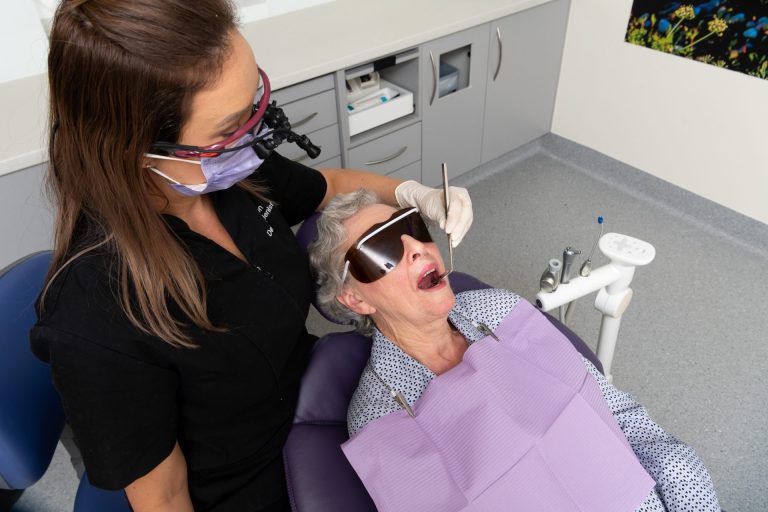
- Why visits matter: Over time, dentures can loosen or rub in the wrong spots. Periodic visits allow your dentist to check the fit, adjust pressure points, and repair any damage before it turns into something bigger. Our dentists will also be able to professionally clean your dentures to remove stain and hardened plaque (calculus) off their surface, which you won’t be able to remove at home. This keeps them looking better for longer!
- What your dentist will check: Your dentist will check how your dentures fit, look for any sore spots on your gums, and determine whether the dentures are showing any signs of wear that need attention. They’ll also keep an eye on your natural teeth and overall oral hygiene.
- When to reline or replace: Dentures don’t last forever. On average, they may need a reline every couple of years and a full remake every 5–7 years. If they feel loose, cause pain, or make it hard to eat, it’s time to book an appointment at your dental clinic.
6. Diet and usage considerations
What you eat and how you use your dentures each day have a big impact on their longevity. A few smart choices here and there can save them from unnecessary damage.
- Avoid very hard, sticky or tough foods: Things like toffees, nuts, and chewy steak can put extra stress on dentures. Over time, this can cause cracks or loosen the fit.
- Cut food into small pieces: Breaking food down into smaller bites makes it easier to chew without straining your dentures (or your gums).
- Be cautious with adhesives: Denture adhesives can be helpful, but only when used as directed. Using too much or relying on them to fix a poor fit is a red flag.

Things to watch out for
Often, dentures will give you signs that something isn’t quite right. Catching issues early can save you pain, stress, money, and hassle down the line. Here are a few warning signs to be on the lookout for:
- Looseness or slipping: If your dentures aren’t staying in place anymore, it’s a sign they may need adjusting or relining.
- Sore spots or irritation: Painful gums or red patches can mean your dentures aren’t fitting the way they should.
- Cracks, chips or wear: Even very small breaks can weaken your dentures over time.
- Difficulty chewing or speaking: If you’re struggling with chewing or speaking more than usual, it’s probably your dentures, not you.
- Bad odours or stains: Persistent smells or discolouration often mean bacteria has built up and your cleaning routine may need a refresh.
Noticing any of these warning signs is your cue to book an appointment with your dentist before the problem becomes bigger than necessary.
Quality denture care in Castle Hill
Looking after your dentures doesn’t have to be complicated. The main things to remember are:
- Clean them every day.
- Store them properly when you’re not using them.
- Avoid harsh products and bad habits.
- Keep up with regular dental check-ups.
These simple steps can keep your dentures comfortable, save you money on repairs, and protect your oral health, too!
At our Castle Hill dental practice, we’ve helped countless patients with new dentures learn how to care for them properly. Whether you need advice, a reline, or a full replacement, our team is here to make sure your dentures, and your mouth, stay in the best shape possible.